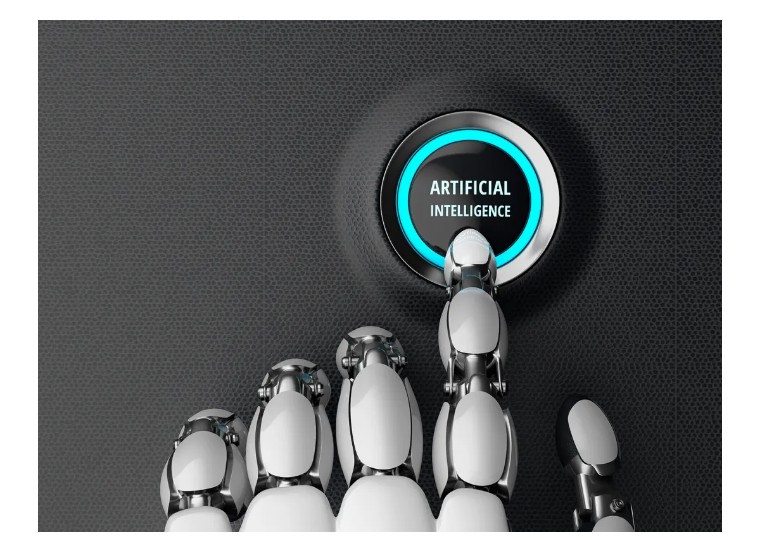
OpenClaw has achieved a complete loop: AI can now autonomously discover problems → train new models → hot-switch → continue iterating. However, energy, heat dissipation, and data are becoming the new "physical locks".
The most intuitive path is:
The "old brain" discovers its own shortcomings, calls training frameworks to generate a "new brain", then hot-switches to the new model, which continues training the next generation. This loop has been fully implemented in the OpenClaw framework.
OpenClaw is an open-source AI agent framework, commonly known as "Lobster" due to its red lobster logo. It does not include built-in large models but provides complete skill encapsulation, long-term memory, heartbeat reflection, and hot-switching mechanisms.
All key components are now in place:
Through the Heartbeat mechanism, AI automatically reviews logs every 30 minutes, analyzes errors, efficiency bottlenecks, and user corrections, writing experiences to LEARNINGS.md.
Using self-improving-agent or agent-evolver, AI can automatically generate training scripts, call frameworks like PyTorch and vLLM for model fine-tuning, and produce new weight files.
By modifying openclaw.json or using the /model command, AI can seamlessly switch to a new model in 3-5 seconds without restarting services or interrupting existing sessions.
New capabilities are encapsulated as independent Skills, stored in ~/.openclaw/skills/, permanently available and no longer affected by catastrophic forgetting.
OpenClaw-RL, released by Princeton University team in March 2026, goes further: converting every user correction and environment error into reinforcement learning signals, achieving "learning while using". Data shows that after just 36 interactions, model personalization scores improved from 0.17 to 0.81. This means AI can not only self-iterate but also become more understanding of you with each conversation.
The "Self-Driving Experiment System" released by University of Chicago in November 2025 enables AI to control robots for automatic material synthesis and optimization, achieving goals in an average of just 2.3 experiments. The APEX system has also achieved autonomous experiment execution in human-machine collaborative environments. These systems demonstrate that AI can design experiments, operate equipment, analyze results, and improve next-generation experimental solutions in a closed loop.
Theoretically, if AI can autonomously manufacture more precise robotic arms, more sensitive sensors, or even optimize chip design, then the chain of "self-hardware evolution" will also be connected. However, this precisely leads to the core warning of this article—physical bottlenecks.
Tim Dettmers, researcher at Allen Institute for Artificial Intelligence, clearly stated in his latest analysis: "Computation is physical, not abstract." The following three ceilings cannot be avoided no matter how intelligent AI becomes.
A single H100 GPU has a peak power consumption of approximately 700W, and an AI cabinet's power density has exceeded 15 kilowatts. Next-generation B200 and P100 cabinets will reach 50-100 kilowatts—this is already an industrial heat source, not IT equipment. The issue is not "whether there is electricity" but "whether heat can be dissipated". Even with nuclear fusion providing unlimited power, Earth's atmosphere has limited heat dissipation capacity, and chip thermal limits are determined by material physical properties. Both Jensen Huang and Sam Altman have publicly stated that energy supply is the main bottleneck or limiting factor for AI development.
High-quality human text data is expected to be exhausted between 2026-2028. Synthetic data can alleviate this but carries "autophagy risks"—training AI with AI-generated data may lead to model collapse, losing diversity and creativity. Real-world physical interaction data (such as robotic arm tactile sensations and sensor signals) may be the last rich mine, but collection costs are extremely high and difficult to synthesize at scale.
Dettmers believes that Transformer's success is not accidental but is close to the optimal engineering choice under current physical constraints. Continuing to stack parameters leads to rapidly diminishing marginal returns. Hardware optimization space was largely exhausted around 2018, with subsequent improvements coming from engineering dividends (FP16→INT8→INT4), not order-of-magnitude leaps. True architectural breakthroughs may require revolutions at the level of physical principles—photonic computing, quantum computing, neuromorphic computing—which are still far from commercialization.
Welcome to like and follow our official account
Scan the QR code below
Get free data trial
Long-press to scan QR code and join the platform
Copy link to access Amazon platform
ma.globalsellingcommunity.cn/page/form/index↗
Global Layout
Replicating domestic experience overseas
Trading time for space
Go-Global Solutions